Read once, eight quant schools.
Quant trading isn’t a homogeneous thing. Citadel Securities clears tens of millions of orders per second, Renaissance’s Medallion compounded at 39% net for 30 years, AQR runs $140B of factor strategies — they’re all called “quant,” but they’re not really doing the same thing. This guide partitions the field by school and works through each of the eight: core idea, leading firms, market share, holding period, hardware / data / people, edges and limits — so you can figure out which school you actually want to work in before stepping into this world.
§01 · Framework — the four axes of quant
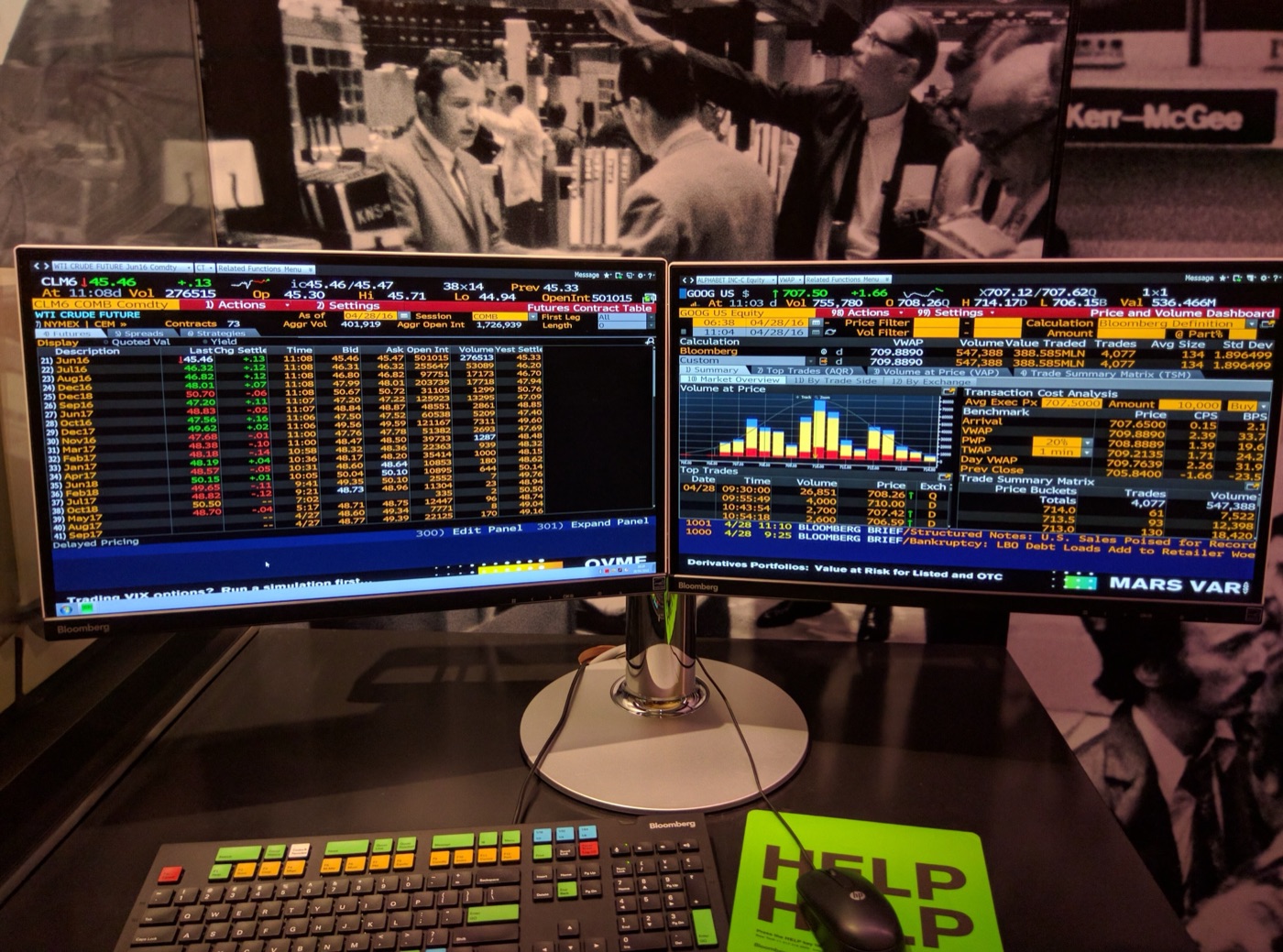
Image: Wikimedia Commons / CC BY-SA 4.0.
“Quantitative trading” covers everything from sub-millisecond market making to long-horizon factor portfolios rebalanced annually — any pool of capital where math models drive decisions. Different schools all look like “code + data,” but they differ enormously across four axes. Get the four axes straight first, then look at any single school, and the catch-all word “quant” will stop confusing you.
- Holding period. From microseconds (HFT), minutes-hours (StatArb), days-weeks (event / intraday factors), months-quarters (CTA / macro), to years (factor / risk premia). Different periods drive different return sources, capacity, and data / hardware needs. Shorter → more infrastructure-bound; longer → more research-bound.
- Source of return. Fundamentally only four kinds: liquidity provision (market making), pricing dislocations (arbitrage), risk taking (risk premia), predictive alpha (forecasting). Each school combines them in different proportions. “Whose money am I actually taking?” is the most basic question.
- Capacity. HFT ≤ $10B, StatArb ~$50-100B, single-strategy CTA ~$20B, factor can be $1T+. Lower-frequency strategies have larger capacity. That’s the underlying reason high-freq stays inside prop shops while low-freq becomes large asset management. Medallion’s hard close around $10B = HFT-class capacity ceiling.
- Infrastructure intensity. From a single laptop (factor) to cross-continental microwave + FPGAs (HFT) on a continuous spectrum. The HFT bar is rocket-science; the factor bar is more like writing a book. Mismatching this forces a small team onto a track they fundamentally cannot afford. See §10 for the hardware comparison.
Bottom Line · Pick your school first, then talk strategy.
“Doing quant” is too broad a term — like “doing internet.” A two-person team with $1M cannot grab share from Citadel’s market-making book (5 orders of magnitude on hardware alone), but running CTA trend or a multi-factor book is entirely feasible. Picking the right school is the most important first step into this world.
§02 · High-frequency market making — the arms race in microsecond land
HFT (High-Frequency Trading) and Market Making are formally separable in academic terms but practically inseparable at the top firms — they quote both sides for the spread + race to pick off resting orders. This is the “hardest” school in quant: hard hardware, hard people, hard profits.
Core idea
The bid-ask spread sits there because someone wants to buy now and someone else wants to sell now. Market makers quote two-sided prices, provide instant liquidity, and earn that spread as a “service fee.” A few cents per trade × hundreds of millions of trades per day = a stable cash flow.
HFT extensions: Latency arb — the same stock prices differ by milliseconds across NYSE and Nasdaq, the faster machine eats the slower side; order-book prediction — using order placements and cancellations to forecast the next 100ms of price action.
Leading firms
- Citadel Securities — handles ~40% of US retail order flow, #1 in global ADV
- Virtu Financial — listed market maker, with a streak of 1,500+ profitable trading days
- Jump Trading — early microwave-network pioneer · Chicago-NYC dedicated link
- Jane Street — ETF market-making leader, OCaml shop, ceiling of campus recruiting
- Hudson River Trading (HRT) · DRW · IMC · Tower Research · Two Sigma Securities
Market share and scale
| Metric | Number |
|---|---|
| US equities HFT share (volume basis) | 50-60% |
| European equities HFT share | ~40% |
| Citadel Securities US order-flow share | ~40% |
| Virtu 2024 net trading revenue | ~$2.5B |
| Top HFT profit per contract (index / treasury) | $0.05-$0.50 |
| Typical holding time | microseconds-seconds |
Typical P&L
A common stat for market makers: Sharpe 8-12 (annualized return / annualized vol), profitable almost every day, with maybe 1-2 losing days a month. But capacity is severely limited — beyond a certain AUM, returns collapse instantly. That’s the core reason HFT stays in prop and doesn’t run outside money.
Edges and limits at a glance
- Edges. Sharpe extremely high (8-12+) · low / zero correlation to traditional assets · benefits in crisis years (liquidity demand spikes) · very hard to be poached (code + hardware + talent are systemic moats).
- Limits. Hard capacity ceiling · regulatory risk (SEC/FINRA fines, market-manipulation charges) · arms race burns cash (hundreds of millions of capex per year) · poor public optics (“scraping the spread”).
⚠ Common rookie mistake · HFT is not “write a strategy plus add leverage.”
A retail trader self-teaching Python and renting a VPS is not HFT. Real HFT requires: microwave / laser dedicated lines, PCIe-direct exchange NICs, custom FPGAs, assembly-level code optimization, co-location racks, exchange membership — fall behind by one order of magnitude on any link, and the professionals will eat you alive. Retail traders should not attempt HFT.
§03 · Statistical arbitrage — the school that made Medallion famous
Statistical arbitrage (StatArb) is the most “classical” school of quant. Core idea: use statistical models to find temporary dislocations between prices and bet on convergence. From the 1980s — Morgan Stanley’s APT group under Nunzio Tartaglia — through to Renaissance / DE Shaw / Two Sigma at $100B+ scale.
Core idea
The earliest version was pairs trading: when two correlated stocks (e.g. Coke / Pepsi) diverge from their historical mean, long the cheap one and short the expensive one, and bet on convergence. Later this expanded into multi-stock multi-factor models: decompose stocks into dozens or hundreds of factor exposures and arbitrage every factor dimension using historical mean and volatility.
Modern StatArb’s typical holding period: minutes to days. Medallion is reportedly mostly intraday; DE Shaw / Two Sigma run minute-to-week horizons; some mid-frequency funds run day-to-week.
Leading firms
- Renaissance Technologies · Medallion — since 1988, 30 years at 39% net annualized, internal-only, closed at $10B. The spiritual totem of every quant fund.
- DE Shaw — since 1988, ~$60B AUM, full product line. David Shaw is also a computer scientist by training.
- Two Sigma — since 2001, ~$65B AUM, early ML adopter.
- Citadel (Wellington / Tactical) — multi-strategy flagship; the quant component is the workhorse.
- PDT Partners — direct lineage from Morgan Stanley APT, founded by Peter Muller.
- WorldQuant — Igor Tulchinsky (formerly head of quant at Millennium), the “crowd-sourced alpha” model.
Scale and industry standing
| Metric | Number |
|---|---|
| Global hedge fund AUM | ~$5T |
| Of which “quant / systematic” share | ~30-35% |
| StatArb + ML share within quant | ~40% |
| Medallion 1988-2020 net annualized (after fees) | ~39% |
| Top StatArb Sharpe | 2-4 |
| Typical daily turnover | 30-300% |
P&L structure
The standard StatArb picture: market neutral + extreme diversification (hundreds to thousands of stocks). Per-trade win rate is maybe 51-53%, but the trade count is enormous, and the central limit theorem pulls overall Sharpe to 3+.
The trouble is “regime collapse” — the 2007-08 “Quant Quake,” when StatArb funds were crowded into the same factors, all started deleveraging together, trampled each other, and Goldman GEO fell 30% in a week. This is StatArb’s crowding-risk destiny.
Edges and limits at a glance
- Edges. Sharpe 2-4 · market neutral · capacity to $50B+ · academically transparent (mean reversion + cointegration) · strong compounding from data / research.
- Limits. Crowding risk · factor decay (alpha half-life 1-3 years) · high infrastructure cost · top talent gated by “Renaissance ivory tower” style closure.
§04 · CTA trend following — fifty years of the old school
CTAs (Commodity Trading Advisors) are registered under the US CFTC and run the oldest systematic strategies. The Turtle Traders, Bill Dunn, John Henry have been running them since the 1970s-80s. The core idea fits on a single page: price trends, once formed, persist — go with the trend, with strict stops.
Core idea
Put 50-150 global futures (equity indices, rates, FX, energy, metals, agriculture) into one basket and use moving averages, breakouts, momentum rules to set position direction and size for each. Go full position when a trend forms; reverse or flatten on the opposite signal.
Fundamentally a convex strategy — frequent small losses, sparse big wins. Most years modestly positive or modestly negative, with big crisis-year payoffs (AHL +40% in 2008, CTA index +21% in 2022).
Leading firms
- Man AHL — London-born, AHL Diversified is one of the CTA benchmark strategies.
- Winton — founded by David Harding (one of the original AHL co-founders).
- Aspect Capital — Anthony Todd (also from AHL).
- DUNN Capital — Bill Dunn since 1974, fifty years across multiple generations.
- Graham Global · Millburn · Chesapeake · Transtrend · Lynx Asset Management
- AQR Managed Futures — academic-style CTA, the “mutual-fund version” at $10B+ scale.
Scale and performance
| Metric | Number |
|---|---|
| Global CTA / managed futures AUM | ~$350B |
| Share of global hedge fund industry | ~7% |
| SG Trend Index long-run annualized | ~5-7% |
| SG Trend Index Sharpe | 0.4-0.7 |
| 2008 CTA index return | +18% (SPX -38%) |
| 2022 CTA index return | +20% (SPX -19%) |
| Typical holding period | 1-12 months |
P&L structure
CTAs are characterized by positive skew — win rates of just 35-45%, but the average winner is 3-5× the average loser. “Let your winners run, cut your losers” — that old-school maxim is the CTA story in one line.
The biggest risk is long drawdowns: 2013-2019 the CTA complex underperformed bonds for nearly six years, and the “trend drought” closed many shops. 2020-2022 brought a revival, but it remains a “wait for the wind” strategy that demands patient capital.
Edges and limits at a glance
- Edges. Pronounced crisis alpha · low correlation with stocks/bonds · transparent and explainable · large capacity ($50B+ per strategy) · low hardware bar.
- Limits. Low Sharpe (0.5-0.8) · prolonged drawdowns (six-year plateaus aren’t rare) · whipsawed in choppy markets · depends on the existence of trends.
§05 · Systematic macro — codifying the Dalio playbook
Systematic macro sits between CTA and StatArb — slow trades on macro variables driven by economic causation, but executed by code rather than by a portfolio manager’s discretionary call. Representative shops: the systematic portion of Bridgewater Pure Alpha, AQR Macro, Graham Global.
- Core idea. Codify causal chains like “Fed hikes → USD up → EM currencies down” into rules, calibrate parameters on historical data, and rebalance periodically. Difference vs CTA: CTA looks at price, macro looks at fundamentals. Difference vs discretionary macro: no human gut calls — fully systematic.
- Leading firms. Bridgewater Pure Alpha (systematic portion), AQR Macro, Graham Global, AHL Evolution, Man Numeric macro products.
- Scale. Global systematic macro AUM ~ $150B. ~30-40% of Bridgewater’s $125B is systematic.
- Holding period. Weeks to quarters. Rebalance cadence is far slower than CTA; parameter adjustments feel more like updating a “macro canvas” than chasing signals.
- Return level. Sharpe 0.7-1.2; Pure Alpha long-run net annualized roughly 10-12% (lower than Medallion but with 10× the capacity).
- Biggest challenge. “Macro causation” breaks down in QE / zero-rate / regime-shift periods. 2022-2023’s most aggressive Fed hiking cycle stunned many macro models because the historical “rates vs FX” correlation reversed.
§06 · Factor / risk premia — most retail-accessible, most academic, cheapest
Factor investing is the school where academia and practice are most tightly coupled. After Fama-French’s three- and five-factor models, Value / Momentum / Size / Quality / Low-Vol were industrialized into funds, ETFs, and Smart Beta — the only “quant” school that has actually reached ordinary investors’ wallets.
Core idea
Sort stocks (or other assets) by some “fundamental / price characteristic,” go long the high scorers and short the low ones (long-short) or just long (long-only Smart Beta). Over the long run these factors carry a “risk premium” — excess returns paid for bearing certain kinds of risk.
The classic six factors:
- Value: long low P/B, short high P/B
- Momentum: long the past-12-month winners, short the losers
- Quality: high ROE, low leverage, stable earnings
- Size: small cap > large cap (historical premium, broke down in the 2010s)
- Low-Vol: low-volatility stocks earn no less than high-vol over the long run
- Carry: rate-differential / forward-basis arbitrage (cross-asset)
Leading firms
- AQR Capital — founded by Cliff Asness (a Fama disciple), $140B, the largest factor fund.
- Dimensional Fund Advisors (DFA) — deep collaboration with Fama / French, $775B, factor passivization at the core.
- Research Affiliates — Rob Arnott’s “fundamental indexing” school.
- BlackRock Systematic / SAE · State Street Advanced Research — quant arms of large institutions.
- Vanguard / iShares Factor ETFs — MTUM, VLUE, QUAL, USMV are factor ETFs retail can buy.
Scale · performance
| Metric | Number |
|---|---|
| Global Factor / Smart Beta AUM | ~$1.5T |
| AQR AUM | ~$140B |
| DFA AUM | ~$775B |
| Typical Long-only Smart Beta excess | 1-3% annualized |
| Value factor 2010-2020 performance | Severely behind (-30%) |
| Long-run momentum premium | ~8% annualized |
| Typical holding period | months-years |
Defining feature
Massive capacity + extremely low fees. Smart Beta ETFs charge 0.15-0.30%, a world apart from a hedge fund’s 2/20. That’s the only reason factor strategies can “reach retail.”
But long stretches of underperformance are normal — Value lagged growth by 30% from 2010 to 2020, and investors nearly abandoned the academic faith. 2021-2023 brought it back strongly. Factor investing is a “tax on patience”.
Edges and limits at a glance
- Edges. Unlimited capacity · ultra-low fees · academically transparent · accessible via ETFs · long-run Sharpe ~0.5 with marginal value over stocks/bonds.
- Limits. 5-10 year underperformance is common · factor crowding · client redemption pressure · repeatedly slapped in extreme AI / tech outperformance years.
§07 · Machine learning — neural nets in finance — a decade in
ML quant isn’t strictly a separate school — it’s a cross-cutting toolkit any school may use. But funds with “ML / deep learning as the core method” have become a school of their own: distinct datasets, distinct infrastructure, distinct talent profiles. They blew up in the late 2010s and have been standard equipment in every new quant fund post-2020.
Core idea
Traditional factor models assume linearity (y = a + bx + ε). ML allows non-linearity + high-dimensional interactions — Gradient Boosting, XGBoost, Random Forest, LSTM, Transformer have all been tried in quant.
Typical applications:
- Throw 1000+ features (financials, sentiment, alt data, price-volume) into a boosting model
- Use NLP (BERT/LLM) to turn news / earnings calls / Reddit posts into features
- Use computer vision to count cars in Walmart parking lots from satellite images, or oil-tank shadows
- Reinforcement learning (RL) for optimal execution (TWAP/VWAP optimization, liquidation)
Leading firms
- Renaissance (reportedly using ML deeply for years internally)
- Two Sigma — most famous in industry for ML, with research platforms Halite / Beta open
- WorldQuant — “Alpha Factory” mining tens of thousands of factors at scale
- Voloridge Investment Management — founded by David Vogel, pure ML
- Numerai — crowd-sourced data science, “crypto + quant”
- QuantConnect / Quantopian (closed) — community ML strategy platforms
The reality
Not as magical as the marketing. The real picture:
- Feature engineering > algorithm choice — XGBoost vs LSTM differ by < 1% in production
- Sample size is the bottleneck — 30 years of daily stock data × 5,000 stocks = under 40M rows, which is “small data” for deep learning
- Backtest overfitting is severe — every “neural net Sharpe 3” in backtest, live 0.5 in production story has been told a hundred times
- Poor explainability — risk teams can’t justify “why are we long Moutai right now,” which is a problem for both compliance and risk
Infrastructure
| Component | Scale |
|---|---|
| GPU cluster | 100-1,000+ H100s |
| Data scientists / ML engineers | 50-500 people |
| Alt data annual spend | $10-100M |
| Data storage / pipelines | petabytes |
⚠ Newcomers fall hardest here · “Pick stocks with GPT” / “LLM stock picking” is 99% scam.
The gap from academic study to production deployment is enormous. A backtested Sharpe 3.0 has a 70% chance of becoming -0.5 live — reasons include look-ahead bias, survivorship, underestimated trading costs, out-of-sample failure. Any “AI quant product” that can’t show 3+ years of live track record should be treated as no track record.
§08 · Event-driven quant — short-term alpha around catalysts
Event-driven quant sits between StatArb and fundamental quant. Core logic: find well-defined catalysts (earnings, M&A, index inclusion, analyst rating changes) and place systematic bets in the days / weeks around the event.
- PEAD · Post-Earnings Announcement Drift. After a big earnings beat, prices keep drifting in the same direction for 1-2 months. The longest-confirmed academic anomaly, but alpha has decayed from ~1%/month in the 1980s to ~0.2%/month today.
- Merger Arb · merger arbitrage. Cash deals: buy the target after announcement, lock in the “deal price - market price” spread. Spreads typically 1-3%; a deal break can be -20%+. 90%+ win rate, but enormous tail risk.
- Index Rebal · index inclusion / removal. In the 4-6 weeks between an S&P / Russell rebalance announcement and effective date, additions average +5-8% and deletions -3-5%. Alpha narrowed post-2020 but remains stable.
- Analyst Rev · analyst rating revisions. After upgrades, 1-5 day alpha ~0.5-1%; downgrades stronger. Combine with IBES (Institutional Brokers’ Estimate System) data.
- IPO / Spin-off · IPOs / spin-offs. Spin-offs outperform long-term (Joel Greenblatt’s classic strategy). IPOs do the opposite — they underperform the market over the long run.
- Buyback · buyback announcements. After large buyback announcements, the stock outperforms the market by 3-5% over the next 6-12 months on average. Filter by buyback size / market-cap ratio.
Leading firms
Millennium (several pods within the multi-strat), Point72 (the Cubist quant unit), Balyasny, Schonfeld, and other “pod shops” all use event-driven quant heavily. Standalone event-quant funds are rare; most live inside multi-strat platforms.
§09 · Crypto quant — a 7×24 new market
Crypto quant is the only “born-from-zero” market in the past decade. 2017-2021 was the wild-growth phase — cross-exchange arbitrage easily delivered Sharpe 5+. After 2022, with traditional HFTs like Jump, Jane Street, and DRW entering, it has become as “clean” as traditional markets — but some structural alpha remains.
- CEX Arb · centralized-exchange arbitrage. Across dozens of exchanges (Binance / Coinbase / Bybit / OKX), BTC / ETH spreads occasionally hit 10-50bps. Pre-2021 they reached 1-5%. Requires capital at every exchange + low-latency networks.
- Funding Rate · funding-rate arbitrage. Perpetual futures settle funding every 8 hours. Long spot + short perp locks in the funding. 20-40% annualized during the 2021 bull market; now 2-8%.
- DEX MEV · on-chain Maximal Extractable Value. Sandwich attacks, arbitrage, liquidations. Post-Ethereum-PoS, divided between Builder / Searcher roles. MEV-Boost has extracted $1B+ total; top searchers earn tens of millions a year.
- Basis Trade · basis trading. Spot / futures spread arbitrage. BTC annualized basis can hit 10-25% (bull markets). A common low-leverage steady-yield strategy for institutions.
- Market Making. Both DEXs (Uniswap v3, Curve) and CEXs (Coinbase, Kraken) offer market-making opportunities. LP fees + liquidity incentives. Wintermute, GSR, Flow, B2C2, Cumberland are the leading market makers.
- Stat Arb · crypto stat arb. Long-short hedging across BTC / ETH / SOL / mid-and-small caps. Sharpe has broadly fallen to 1-2 post-2023.
Scale and players
| Metric | Number |
|---|---|
| Global crypto-quant fund AUM | ~$30-50B |
| Top market maker daily volume (Wintermute) | $5-10B |
| MEV extracted in 2024 | ~$700M |
| Major players | Jump · DRW · Jane · Wintermute · GSR · Cumberland · B2C2 · Galaxy · Flow |
⚠ Crypto-quant-specific risk · Counterparty risk > Market risk.
FTX / Three Arrows / Alameda blowing up in 2022 wiped out a generation of hedge funds and quant teams overnight. Custody risk, exchange-bankruptcy risk, and stablecoin de-pegging risk all dwarf the market beta itself. The number-one skill in crypto quant is treasury and counterparty management — not alpha.
§10 · Hardware / data / people — infrastructure across the 8 schools
The table below is required reading before starting a quant career or business — the school you choose dictates the minimum starting resources. Misaligning school and resources is the most common fatal error for beginners.
| School | Hardware / latency | Annual data spend | Headcount (core) | Minimum viable scale |
|---|---|---|---|---|
| HFT / Market making (capex-heavy) | FPGA · co-lo · microwave · sub-microsecond | $20-100M (direct feeds + microstructure) | 100-500 people: ⅓ C++/hardware, ⅓ quant, ⅓ ops | $50M+ to start; most small teams cannot enter |
| StatArb | CPU/GPU clusters · ms-seconds | $5-50M (L2 data + alt) | 30-300 people (research:engineering ≈ 1:1) | $10-50M of research investment to start |
| CTA / Trend | Standard servers · seconds-minutes | $0.1-2M (futures EOD + minute data) | 5-50 people | $1-5M is workable |
| Systematic macro | Standard servers · day-week | $1-10M (macro databases like Bloomberg) | 20-100 people | $5-20M to start |
| Factor / Risk premia | A laptop ± hosted server · monthly | $50K-1M (Compustat / CRSP) | 2-20 people | $500K is workable (mutual fund / SMA) |
| ML / Deep learning | GPU clusters (100-1000+ H100) | $10-100M (alt data + labeling) | 50-500 people (ML engineers ~50%) | $20M+ GPU + people |
| Event-driven quant | Standard servers + low-latency news | $1-10M (Reuters / Ravenpack / alt) | 10-50 people | $5-10M to start |
| Crypto quant | Cloud GPU + multi-exchange APIs · ms | $100K-5M (on-chain + CEX) | 3-30 people | $1-5M is workable · but custody risk is high |
Practical takeaway · Two-person team starting at $100K — what should you do?
- Factor / Smart Beta (workable) — wrap as mutual fund / SMA, 1-3% annualized excess is achievable
- CTA trend (workable) — futures account + a database + basic rules will run
- Crypto quant (workable but high risk) — funding rate + simple arbitrage works, but custody risk is large
- Event-driven (workable) — earnings-drift type strategies are cheap to run
- HFT / hard StatArb / ML — don’t try at this size; you lose at the hardware / data starting line
§11 · How to choose — one chart picks your school
- I’m an individual investor with $10K-$1M. Options: factor ETFs (MTUM / VLUE / QUAL / USMV) + low-cost trend-following ETFs (KMLM / DBMF). If you want to write your own code, try a simple momentum + mean-reversion combo, but don’t expect Sharpe > 1. Make not making big mistakes the primary goal.
- Small team with $1-10M. Options: CTA trend following + event-driven + crypto quant. Avoid HFT and ML deep learning. Spend 1-2 years building data and backtest infrastructure before going live.
- I want to work in / job-hunt for quant. Foundational math (probability / statistics / linear algebra) + programming (C++ / Python) + depth in one specialty (stochastic processes / econometrics / ML). Jane Street / Citadel / Two Sigma SWE/quant roles start at $300-500K all-in, but competition is brutal.
- I’m a large institution (bank / broker / insurer). Source mature factor products from AQR / DFA + a small CTA allocation for diversification. Building an in-house quant team below ~$500M AUM has a terrible cost-benefit — people + data costs > expected excess.
- Founder with $10-50M seed. Pick a small, deep school (e.g. crypto funding rate, a single asset-class trend strategy, a Quality tilt within factor), produce 3 years of live track record, then expand horizontally. The biggest trap is trying to do everything → doing nothing well.
- $100M+ to allocate. Diversify across 3-4 schools and managers. CTA 20% + StatArb 30% + multi-strategy platform 30% + factor 20% is a common configuration. The work is in “manager selection” rather than “strategy selection” — quant alpha mostly comes from people, not from schools.
One-line takeaway · Quant is a “resource-matching” game, not an “IQ game.”
Medallion looks like the smartest people winning, but really it’s the earliest (1988), smallest (internal-only), and deepest (30 years of compounding) capturing the spot. Replicating that path today is nearly impossible — but at every scale there is an appropriate school. Picking the right play for your scale matters ten times more than chasing “Renaissance-level Sharpe.”