How exchange rates form, and how money crosses borders.
Foreign exchange is the largest, deepest, and longest-trading financial market on the planet — over $7.5T traded daily, 24 hours a day. It’s also the one most often misunderstood by newcomers: there’s no central exchange, no daily price-limit halts, every quote is a currency pair instead of a single price, and you have to layer leverage, overnight interest, and spreads on top. This guide turns the FX market’s structure, quoting conventions, price drivers, common strategies, and classic traps into a reference primer you can flip through repeatedly — learn the language first, talk strategy later.
§01 · Framework — the 10-minute FX framework
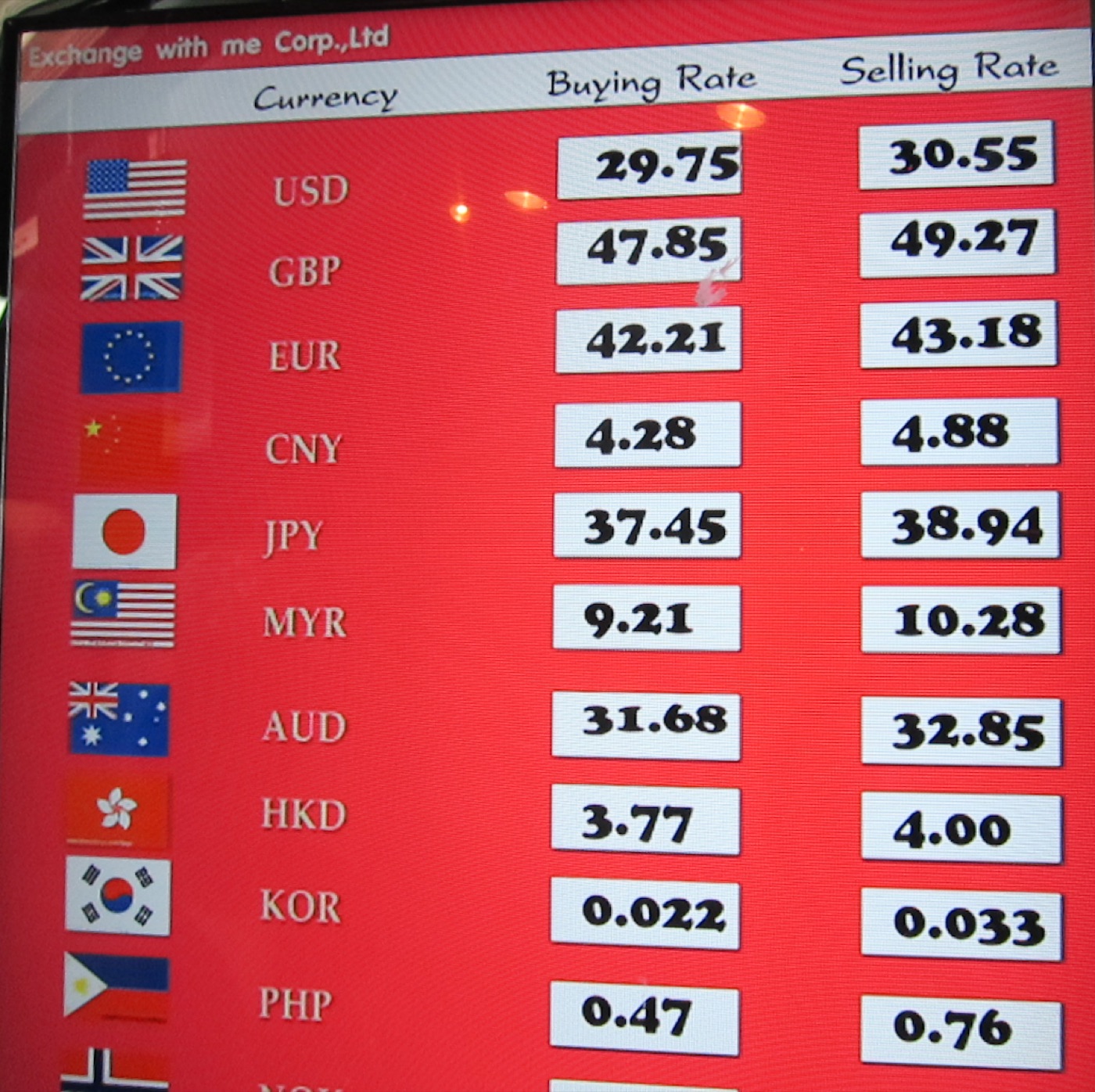
Image: Wikimedia Commons / CC BY-SA 2.0.
“Foreign exchange” (FX / Forex) is fundamentally the relative price of two currencies. When you buy EUR/USD, you’re long the euro and short the dollar at the same time — no FX trade ever holds a single “absolute value” on its own; everything is paired. This is the most fundamental difference from equities.
Unlike equities, FX is an over-the-counter (OTC) market — there’s no NYSE-style central matching engine. The interbank market among hundreds of major banks is the actual “first-tier price source”; downstream retail brokers, ECNs, and institutional platforms simply mark up and redistribute those quotes through layers.
- Size and structure. The BIS Triennial Survey is the authoritative reference. 2022 daily turnover was $7.5T, of which spot was only ~28%; forwards + swaps account for 60%+. Pure “speculation” is a small slice of FX. Major trading hubs: London 38% · NYC 19% · Singapore 9% · HK 7%.
- Who trades. Four participant categories: (i) central banks (intervention, reserve management); (ii) commercial banks (market making + prop); (iii) multinationals (trade, hedging); (iv) funds + retail (speculation). The quotes retail traders see through brokers are essentially the “leftover prices” of the first three groups. 80%+ of daily flow comes from non-retail participants; retail is a “price taker”.
- Trading sessions. 24x5 (closed weekends), rotating by time zone: Sydney → Tokyo → London → New York. The London + New York overlap (13:00-17:00 UTC) has the deepest liquidity and is the home turf of news-driven moves. The daily “London Fix” at 16:00 London time is the key institutional rebalancing window.
- What sets the price. Long-run: purchasing power parity (PPP) + interest rate parity (IRP); medium-term: central-bank policy + balance of payments; short-term: data releases + risk appetite + positioning + liquidity. The dominant factor depends entirely on the timescale. See §05 Drivers.
- Why leverage exists. Major pairs typically move 0.5-1% in a day; annualized volatility unleveraged is just 7-10% (lower than equities). Brokers offer 10-100× leverage, which turns a “low-volatility asset” into a “high-yield + high-blow-up product” — for retail, leverage is the risk itself, not the opportunity itself. US retail caps at 50:1, EU ESMA at 30:1, Japan at 25:1.
- Three differences from equities. (i) Always paired — no “absolute valuation”; (ii) central banks are the ultimate counterparties — no individual stock has anything like that; (iii) liquidity tiers sharply by pair — EUR/USD spread is 0.2 pips; ZAR/TRY can be 50 pips. Always start practicing on the major pairs.
Bottom Line · “Currency pairs are a two-sided bet” — get this first, then talk strategy.
Most beginners lose by saying “I think the dollar will fall.” But you can’t short the dollar in isolation — you must go long some other currency. If the EUR is also weakening (just slower than USD), EUR/USD will go down. Think of every trade as “is A faster or slower than B,” not “A will go up / down.”
§02 · Pairs — majors, crosses, exotics
The world has roughly 180 fiat currencies, which combine into tens of thousands of possible pairs. But 95% of all turnover is concentrated in fewer than 20 pairs. By liquidity and dollar participation, the industry buckets them into three tiers: Majors, Crosses, and Exotics.
| Tier | Representative pairs | Characteristics | Spread (mainstream brokers) | Daily range |
|---|---|---|---|---|
| Majors | EUR/USD, USD/JPY, GBP/USD, USD/CHF, AUD/USD, USD/CAD, NZD/USD | Seven majors with USD on one leg. Deepest liquidity, tightest spreads, broadest news coverage. | 0.1-1.5 pips | 50-100 pips |
| Crosses | EUR/GBP, EUR/JPY, GBP/JPY, AUD/JPY, EUR/CHF, CHF/JPY | Major-to-major pairs without the dollar. GBP/JPY is famously volatile (nicknamed “the beast”); EUR/CHF is the pair the SNB watches most closely. | 1-4 pips | 80-200 pips |
| Exotics | USD/TRY, USD/ZAR, USD/MXN, USD/CNH, USD/INR, USD/BRL | Emerging-market currencies. Wide spreads, high overnight interest, high political risk. Suitable for hedging real exposure, not for new speculators. | 10-100+ pips | Up to 3-10% in a day |
| Offshore RMB (CNH) | USD/CNH (offshore counterpart of onshore CNY) | Hong Kong opened in 2010. CNH is freely market-priced; CNY is managed by the PBoC fix ± 2% band. The CNH vs CNY spread is a barometer of capital-outflow pressure. | 3-10 pips | 200-500 pips |
| Metals | XAU/USD (gold), XAG/USD (silver) | Not technically fiat, but FX platforms quote them universally. Priced per ounce, not per “currency unit.” | 20-40 cents | $20-50 |
Reading “base / quote” in a pair
EUR/USD = 1.0850 means: to buy 1 euro you pay 1.0850 dollars. Left = EUR = base currency, right = USD = quote currency. Long EUR/USD = long EUR + short USD.
— base / quote order is not interchangeable
There’s a convention to ordering: USD is usually quoted second (e.g. EUR/USD, GBP/USD), but first in USD/JPY, USD/CHF, USD/CAD. It isn’t “stronger first” — just market history.
Crosses (non-USD pairs) generally put the “stronger” currency first: EUR/GBP, EUR/JPY, GBP/JPY — you don’t see notation like JPY/EUR.
Direction: an upward move = the left currency strengthens against the right. Long USD/JPY rising = USD strengthens vs JPY = yen weakens.
§03 · Quotes & spreads — the mechanics of a quote
The first reaction to an FX quote is “which price do I use?” — because every quote shows two prices: bid and ask. Buy at ask; sell at bid. The difference = spread.
Worked example · EUR/USD. Bid 1.0849 / Ask 1.0850, spread = 1 pip. Buy 1 lot (100K EUR) → pay $108,500. Hold to 1.0880, close, sell back → receive $108,800. Gross P&L = +$300 / 30 pips. Less spread & fees, net P&L ≈ $290.
A pip is the smallest unit in FX. For most pairs it’s the 4th decimal — 1.0849 → 1.0850 is 1 pip. JPY pairs (USD/JPY, EUR/JPY) are different because the yen face value is large; for them, a pip is the 2nd decimal (148.12 → 148.13 = 1 pip).
Pipette / fractional pip: a finer 1/10th-of-a-pip unit; modern platforms quote to that level (the trailing 5 in 1.08495 is the pipette).
Lot: standard contract size. 1 standard lot = 100,000 base currency, 1 mini = 10,000, 1 micro = 1,000. Retail typically starts on micro or mini.
How much is one pip worth? For EUR/USD, 1 standard lot = $10 / pip; mini = $1 / pip; micro = $0.10 / pip. This is the formula to internalize first.
Quoting glossary
- Bid · Buy-side quote. The price at which the bank is willing to “buy” the base currency from you. When you sell, you transact at the bid. Always lower than the ask.
- Ask / Offer · Sell-side quote. The price at which the bank is willing to “sell” to you. When you buy, you transact at the ask. Always higher than the bid.
- Spread.
Spread = Ask − Bid. The market maker’s “implicit commission.” Mainstream brokers run 1-1.5 pip fixed spreads on EUR/USD; variable spreads can tighten to 0.1-0.3 pip. Examples: EUR/USD 1 pip · GBP/USD 1.5 pip · GBP/JPY 3-5 pip · USD/TRY 30-100+ pip. - Pip · Percentage in Point. The minimum tick on a pair. Non-JPY pairs = 4th decimal; JPY pairs = 2nd decimal.
- Pipette. Modern platforms quote to the 5th decimal; the last digit is the pipette (1/10 pip). On news releases, prices can “fly” tens of pipettes.
- Lot · Contract size. Standard = 100,000; Mini = 10,000; Micro = 1,000; Nano = 100 (a few platforms). Orders are placed in lots. “I bought 1 lot of EUR/USD” = bought 100,000 euros.
- Pip Value.
Pip Value = Lot × 1 pip. e.g. 100,000 × 0.0001 = $10 (for EUR/USD). The basis for P&L and risk control. Pip values for non-USD-quoted pairs need to be translated back to the account currency. - Slippage. The gap between order price and actual fill. Most visible in fast markets / NFP / central-bank decisions; in gap markets, stop orders can be filled far away from the stop level.
- Requote. Dealing-desk brokers may reject your original quote in fast markets and offer a new one. ECN platforms don’t requote, but they do slip.
§04 · FX products — spot, forward, swap, futures, option
“Buying FX” is actually five different products. Corporates hedge mostly with forwards and swaps; retail mostly trades spot (CFD); ETFs / futures are another institutional venue; options are the tail-risk hedging tool.
- Spot · T+2 Spot FX. “Price agreed today, settle within two business days” (USD/CAD is T+1). What retail sees on MT4 / MT5 is essentially “rolling perpetual spot” — the platform actually rolls your spot position into the next spot day every night (that’s where overnight interest comes from). Spot is ~28% of total FX turnover.
- Forward · Outright Forward.
Fwd = Spot × (1 + r_quote × t) / (1 + r_base × t). “Lock the price today, settle on a specified future date.” The price is set by the rate differential + time, not a forecast of the future. The corporate workhorse for hedging receivables / payables. - FX Swap. Simultaneously a spot and an offsetting forward. Functionally a way to borrow one currency for a period using another as collateral — the largest single product in FX, 50%+ of turnover.
- NDF · Non-Deliverable Forward. Restricted currencies (CNY, INR, BRL, KRW, TWD) can’t settle freely cross-border, so the market uses NDFs to lock in FX rates and net-settle in USD. The USD/CNH vs USD/CNY NDF spread is a barometer of capital-control pressure.
- Futures · FX Futures (CME). Standardized CME contracts: 6E (EUR), 6J (JPY), 6B (GBP), 6A (AUD), etc. Centralized clearing + public Commitments of Traders (COT) reports are an important window into institutional positioning.
- FX Options. Give the buyer the right (but not the obligation) to buy / sell currency at a specified rate. Risk reversal = call vol − put vol — a key gauge of sentiment for a pair.
- CFD · Contract for Difference. The retail-broker workhorse. No physical currency settlement — only the difference settles. Convenient, but with three costs: spread, overnight interest, broker counterparty risk. CFDs are not allowed in the US — regulators require spot or futures.
- FX ETF. UUP (long DXY dollar index), FXE (long EUR), FXY (long JPY), and so on. No leverage, no overnight interest, but with tracking error and management fees (0.4-0.8%). Better than CFDs for long-term position allocation.
How to choose · The use case picks the tool, not the other way around.
- Short-term speculation (intraday / weekly): CFD / spot — flexible leverage, low entry barrier, but spread + slippage eat most of the theoretical profit
- Medium-term direction (monthly / quarterly): FX ETFs or CME futures — transparent pricing + no overnight interest + stronger regulation
- Hedging real exposure: forwards / swaps / options — match cash-flow timing and notional; goal is “to lock,” not “to make money”
- Tail hedge: buy OTM options — pay a small premium to protect against extreme moves (e.g. a sudden USD crash)
§05 · Drivers — what moves a currency
A currency’s “value” is set by a long chain of interacting factors. The dominant factor depends entirely on the timescale — intraday is liquidity + data; monthly is central-bank policy; quarterly is balance of payments; yearly is purchasing-power parity. Mix the layers up and you get blindsided constantly.
Long-run · PPP and IRP
- PPP · Purchasing Power Parity. Long-run FX → cross-country inflation differential. “The same good should cost the same anywhere.” The Big Mac Index is the best-known proxy. Over the long run, high-inflation currencies depreciate (the Turkish lira is a textbook case).
- IRP · Interest Rate Parity.
Fwd/Spot ≈ (1+r_quote)/(1+r_base). Covered IRP says the forward rate is fully determined by the cross-country risk-free rate differential — not a “forecast” — otherwise arbitrage would erase any deviation. - REER / NEER · Real / Nominal Effective Exchange Rate. A trade-weighted basket exchange rate. REER deviating from its long-run mean by 10%+ is a warning sign for reversal — the IMF’s annual REER valuation report is a key reference.
Medium-term · central-bank policy and BoP
- Rate Differential. The number-one driver of medium-term FX. The direction of the 2Y rate differential sets pair direction: Fed hiking + BoJ on hold = USD/JPY higher. Example: 2022 USD/JPY 115 → 150, driven entirely by the Fed-BoJ rate-differential blowout.
- BoP · Balance of Payments. Current account (trade balance) + capital account (cross-border investment) + reserves change. Persistent current-account surplus = long-run currency-appreciation pressure (Japan, Germany, China are structural cases).
- Real Yield.
Real = Nominal − inflation expectation. High-real-yield currencies have a “carry advantage.” Gold and the dollar are often competing for the same “real-yield seat” — rising real yields = stronger USD + weaker gold. - Terms of Trade. Export prices / import prices. Commodity-exporter currencies (AUD, NZD, CAD, NOK, BRL) are highly correlated with commodity prices.
- Capital Flow. US TIC data, EPFR, China SAFE numbers. Foreigners buying Treasuries / equities = appreciation pressure on the local currency; outflows = depreciation pressure.
- FX Reserves. Central banks manage rates by “buying USD, selling local currency” or vice versa. EM resilience to external shocks weakens when reserves / GDP < 15%.
Short-term · data, sentiment, liquidity
- Data Surprise. Actual vs Bloomberg consensus. Deviations of 1σ+ price in immediately. The five “must-watch” releases: NFP, CPI, core PCE, retail sales, PMI.
- Risk On / Off. Risk-on: high-beta currencies (AUD, NZD, EM) lead higher; JPY / CHF / USD are sold. Risk-off reverses. VIX is the most convenient gauge.
- Safe Haven. Traditional havens: USD / JPY / CHF + gold. All three rise together in systemic risk. 2008 / 2020 / 2022 all confirmed it.
- Positioning. CFTC COT publishes weekly on Fridays. Extremes (90%+ historically) in speculative positioning are usually reversal signals. The 2024 short-JPY extreme triggered a fast squeeze.
- Month-end Fix. Major funds rebalance at month-end; liquidity around the WMR 4pm London Fix balloons. If US equities rally into month-end, institutions tend to sell USD and buy foreign currency to rebalance.
- Flow. Direction of “real money / hedge fund” tickets. Retail can’t see it, but you can infer reverse-direction signal from broker “client positioning” stats (“retail heavily long = usually down ahead”).
§06 · Calendar & central banks — the FX event calendar
Macro data sets the medium-to-short-term FX path. Each month you need to mark roughly 10 “must-watch” events on the calendar. Flatten short-term positions or widen stops at least 15 minutes before release — NFP can move EUR/USD 50 pips in a single second.
| Event | Source | Frequency · Time (UTC) | Impact |
|---|---|---|---|
| NFP · Non-Farm Payrolls | US BLS | First Friday each month, 12:30 UTC | The biggest single FX print on the planet. Jobs + wage growth jointly set Fed expectations. |
| CPI | US BLS · EU Eurostat · UK ONS · Japan MIC | Monthly | Core CPI MoM is the watched line. A 0.1pp surprise can move the dollar 0.5%+. |
| FOMC | US Fed | 8 / yr · 18:00 UTC | Rate decision + dot plot (quarterly) + Powell press conference. Three-act move: statement → dots → presser. |
| ECB | European Central Bank | 8 / yr · 12:15 UTC | Rate decision + Lagarde presser. Recent forward guidance has flipped repeatedly; every word change is parsed. |
| BoE | Bank of England | 8 / yr · 11:00 UTC (Thu) | Rate decision + vote split + meeting minutes released together. When the 9-member vote is split, sterling moves widen. |
| BoJ | Bank of Japan | 8 / yr · ~03:00 UTC | After exiting YCC + negative rates in 2024, the BoJ entered a “slow tightening” path; every meeting puts the yen on edge. |
| Retail Sales | US Census | Monthly · 12:30 UTC | Monthly pulse on consumer strength. The “control group” feeds GDP weights — watch it, not the headline. |
| PMI | S&P Global · ISM | Monthly flash + final | 50 is the boom-bust line. Eurozone PMIs lead ECB policy by 2-3 months. |
| GDP | National BEA / Eurostat | Quarterly · 3 vintages (Advance → Second → Final) | QoQ annualized vs YoY conventions differ. The Advance reading provokes the strongest market reaction. |
| PCE | BEA | Monthly | The Fed’s preferred inflation gauge. Core PCE YoY targets 2% — > 2.5% sustains a hawkish stance. |
| Jackson Hole | Kansas Fed | Late August | The Fed Chair’s “academic” speech sets the year’s policy tone — Powell’s 2022 “short and painful” speech battered risk assets. |
| G7 / G20 | Finance ministers | Ad hoc | Watch joint communiqués for “excessive volatility” language → early warning for Japan / other-country intervention. |
| JOLTS / ADP | US BLS / ADP | Monthly | ADP comes 2 days before NFP — not very reliable, but can shift NFP expectations; JOLTS job openings measure labor-market depth. |
Pro Tip · The data isn’t the move — the read vs consensus is.
Whether CPI YoY of 3.2% is bullish or bearish depends on consensus: consensus 3.4%, actual 3.2% = unexpected slowdown → USD lower; consensus 3.0%, same 3.2% = unexpected acceleration → USD higher. Get both “data direction + deviation from consensus” right, and the price reaction makes sense.
§07 · Trade mechanics — leverage, margin, carry
The core difference of FX retail trading is leverage + margin + overnight interest. These three mechanisms turn an originally “low-volatility” asset into a “high-emotional-cost” product. Understanding them matters more than picking any strategy.
- Leverage.
Leverage = position / margin. e.g. 100K EUR / $3,300 margin ≈ 30:1 leverage. Regulators cap leverage: US 50:1, EU ESMA majors 30:1, UK 30:1, Japan 25:1. Offshore unregulated platforms with 500:1+ leverage = high risk. - Margin.
Required Margin = Position Size / Leverage = 100K / 30 = $3,333. “How much cash collateral the position needs.” Used margin = locked up; free margin = available; Margin Level = Equity / Used Margin — drop below 100% triggers margin call, below 50% triggers force-close. - Pip Value. Determines how fast losses accumulate. EUR/USD standard = $10/pip; USD/JPY standard = ~$6.7/pip (because the pip is 0.01, not 0.0001).
- Swap / Rollover · Overnight Interest.
Swap ≈ (r_long − r_short) × position / 365(brokers add a markup). Holding past 17:00 ET, the platform credits / debits interest on the rate differential. Long the higher-yielder = collect interest; the reverse pays. Short AUD long JPY bleeds daily — that’s the cost of carry. - Triple Swap. Holding through Wednesday close charges 3× overnight interest (compensating for the weekend). For overnight strategies, avoid Wednesday or close on Tuesday.
- Stop / TP / Trailing. Every position needs a stop (even a wide one). Trailing stops only run client-side — they vanish when the terminal closes; unreliable in a major move.
- Position Size.
Position = (account × risk%) / (stop pips × pip value). Single-trade risk ≤ 1-2% of account is the iron rule for beginners. $10,000 account · 50-pip stop · 1% risk → pip value $2 = 2 mini lots. - Drawdown. The peak-to-trough percentage decline in account value. A 50% drawdown requires a 100% gain to recover; the psychological burden far exceeds the math.
- VaR · Value at Risk. “With 95% probability, daily loss ≤ X.” Beginners don’t need to compute it, but should know roughly what their portfolio’s worst daily move looks like.
The leverage tax · Leverage doesn’t make winners win more — it just makes losers lose faster.
Industry data is public: at EU ESMA-regulated brokers, 70-80% of retail accounts lose money; US CFTC data is similar. The main reason isn’t “wrong direction,” it’s:
- leverage amplifies normal drawdowns into account-blow-up territory
- spread + slippage + overnight interest combine into a “tax” on every entry/exit
- screen fatigue + over-trading: 20+ trades a day, even a high win-rate dies to commissions
Beginner rules: paper trade 3 months; start live with micro lots ($0.10/pip); single-trade risk ≤ 1%; ≤ 20 trades / month.
§08 · Strategy — carry, trend, mean-reversion, event
Only a handful of FX strategies make money over the long run; each has a clear logic + a typical drawdown scenario. New traders should first understand the “why-it-works + why-it-fails” of each before choosing.
- Carry trade. Long the high-yield currency, short the low-yield currency, collect the rate differential. The classic “set-and-forget” strategy — but a black swan can wipe out two years of carry in one event. AUD/JPY, NZD/JPY, MXN/JPY were the carry workhorses in their day. AUD/JPY fell 40% in a week during the 2008 crisis; carry has since been labeled a “risk-appetite proxy.” Wins when: rate differential is stable · Loses when: VIX spikes.
- Trend following. Multi-timeframe directional view, hold for weeks to months. 2022 USD/JPY 115 → 150 was a textbook policy-driven trend — capturing big moves while a trend is running beats every technical indicator. Tools: moving averages (20/50/200), Bollinger bands, MACD, ADX. The point is “confirm the trend is still alive,” not “guess the top / bottom.” Wins when: policies diverge · Loses when: range-bound.
- Mean reversion. Bet against pairs that deviate 1.5-2σ from their range mean. EUR/CHF, USD/CAD and other pairs with strong fundamental linkage tend to chop, fitting the strategy. Distinguish “range-bound” from “breakout in progress” — the first wave of mean reversion at the start of a trend is exactly the wrong side to be on. Wins when: range holds · Loses when: range breaks.
- Event / news trading. Trade short-term moves around NFP / CPI / FOMC. Either place double-sided breakout orders 5 minutes before the print (straddle), or fade after the first emotional wave. Highly inappropriate for beginners: slippage + spread blowout + false breakouts are the norm. Professional market makers and HFT have structural advantages. Wins when: direction is large · Loses when: whipsawed both ways.
- Correlation / basket. Pair multiple correlated currencies — e.g. long a “commodity-currency basket” (AUD + NZD + CAD) against a “European basket” (EUR + GBP). Diversifies single-currency event risk; effectively a bet on a macro theme. Wins when: theme holds · Loses when: theme reverses.
- Hedging. Not aimed at making money, only at locking in a known exposure. A foreign student paying $50K tuition annually can use forwards / options to lock the FX rate against expected USD weakness. Standard corporate cash-flow hedging: build positions in tranches matching the payment schedule, converting “unknown” FX outcomes into “known” ones. Wins when: volatility hedged · “Cost” = premium / basis.
How to choose · Match the strategy to your time / temperament / capital.
- Full-time + high leverage = event + trend, but the bar to professionalize is extreme
- Part-time research + medium capital = trend following + 2-4 week holds, daily charts as primary
- Long-term passive allocation = FX ETFs + basket logic, annual rebalance
- Existing FX cash flow = hedge, not speculate
§09 · Major currencies — USD · EUR · JPY · GBP · CHF · AUD · CAD · CNH
Every currency has its own fundamental logic. Below is a cheat-sheet view of the top eight (by turnover share): personality, dominant drivers, key indicators to watch.
- USD · US Dollar. Global reserve currency · ~88% of FX turnover (two-sided). The default currency in FX. Watch: Fed policy, 10Y real yields, the DXY index (USD vs basket). Both safe-haven and rate-differential properties — strong in both crises and tightening cycles. Key indicators: Fed Dot Plot · 10Y Real Yield · DXY · NFP · Core PCE.
- EUR · Euro. Second-largest FX currency · ~31% of turnover. A 20-country shared currency with relatively conservative policy. The ECB lagging the Fed by 1-2 steps is the norm, so EUR/USD’s medium-term direction follows the US-Europe rate differential. Brexit / Italy / German industry can all create structural shocks. Key indicators: ECB Depo Rate · German & French CPI · IFO · periphery sovereign spreads.
- JPY · Japanese Yen. Safe-haven currency · ~17% of turnover. A decade of “ultra-low rate” policy from 2013-2023 made the yen the standard short leg of carry trades. Post-2024 BoJ exit from YCC, the yen shifted from “permanent weakness” to “policy variable”. The MoF/BoJ intervention threshold sits around USD/JPY 160. Key indicators: BoJ Policy Rate · 10Y JGB · core CPI · Kuroda/Ueda speeches.
- GBP · British Pound. London financial hub · ~13% of turnover. Nicknamed “Cable” (the historical transatlantic telegraph price). More volatile than the euro — 100+ pip days are common. GBP/USD dropped 10% in seconds the night of the 2016 Brexit vote; political-risk premium is structural. Key indicators: BoE Bank Rate · CPI · retail sales · RICS housing survey.
- CHF · Swiss Franc. Safe-haven currency · ~5% of turnover. The SNB has historical “psychological floors” for EUR/CHF. On 2015-01-15 the SNB suddenly removed the 1.20 EUR/CHF floor → EUR/CHF gapped from 1.20 to 0.85; multiple brokers went bankrupt — the largest overnight move in FX history. Key indicators: SNB Policy Rate · Swiss CPI · EUR/CHF level.
- AUD / NZD / CAD · Commodity Currencies. Commodity exporters · linked to iron ore / dairy / crude oil respectively. “Commodity currencies”: AUD ↔ iron ore / coal / copper / China; NZD ↔ dairy + tourism; CAD ↔ WTI crude. Currency tracks commodity prices closely. Key indicators: iron ore & copper · WTI · China PMI · RBA / RBNZ / BoC decisions.
- CNH / CNY · Chinese Yuan. Managed float · ~7% of turnover (rising). Onshore CNY is managed by the PBoC fix ± 2% band; offshore CNH is market-priced. A widening CNH vs CNY spread = depreciation pressure escalating. The PBoC can lean against it via fix bias, the countercyclical factor, and cross-border remittance policy. Key indicators: PBoC fix · US-China 10Y differential · trade surplus · A/H share discount.
- EM Basket · TRY · ZAR · MXN · BRL · INR. Emerging-market currency basket. High yield + high volatility. The Turkish lira fell 44% in 2021; the Argentine peso fell 50% in a single day in 2023 — the triple risk of politics + central-bank independence + inflation. No amount of carry guarantees coverage. Key indicators: domestic policy rate · CPI · FX reserves · political events.
§10 · Checklist — the pre-trade checklist
Run this checklist before every entry — if there’s any line you can’t answer clearly, don’t trade.
Macro and timing
- What’s the trade’s main driver (rate differential / policy / data / sentiment)?
- What data / central-bank events this week could move the position? Avoid or exploit?
- Where are rate expectations for the two central banks priced today? How far is that from your view?
- What’s the trend / range / breakout picture across multiple timeframes (daily / weekly / monthly)?
- What’s the current risk-appetite direction (VIX / SPX)? Does it align with the position?
Risk and execution
- Position sized so single-trade risk ≤ 1-2% of account?
- Where’s the stop? Is it backed by structure (prior high/low / technical level)?
- Take-profit plan — single target or scale-out? Reward:risk ≥ 1.5?
- After spread + slippage + overnight interest, does the trade still have positive expected value?
- Expected holding duration? Need to dodge Wednesday’s triple swap?
- Any same-direction or highly correlated positions (AUD + NZD, etc.) that stack up real risk?
- Current margin level? What does it drop to with this trade? Enough cushion?
- Order type: market / limit / stop? In news periods favor limit to avoid slippage.
- Is the trade journal logging thesis + expected path + invalidation?
How to use it · Treat FX as a risk-management business, not a “guess up or down” game.
Top traders may have a 45-55% win rate, but their long-run reward:risk > 2:1 — they make more on winners than they give back on losers. The classic beginner mistake is to cut winners short and add to losers — both errors compound into guaranteed losses.
§11 · Common traps — the usual suspects
- High leverage + tight stop = swift stop-out. Beginners often run 100:1 leverage with 10-pip stops — looking like “controlled risk,” but normal intraday noise is 20-50 pips — the stop will almost certainly be tagged, and the price will then run in the original direction. Signal: win rate < 40% · stop-outs > wins by 3×.
- Carry without tail protection. Long high-yield AUD short JPY can carry 4-5% annually, but a VIX spike in one week can erase two years of returns. Carry strategies must have a VIX or implied-vol filter; close when risk appetite turns. Signal: holding carry while VIX > 25 = gambling.
- The news is already priced. “I think CPI will print hot, so I’ll buy USD ahead of it” — the market has already priced the same expectation. When actual matches consensus, USD often falls (event passed = positions unwind). Signal: Buy the rumor, sell the news.
- Stacking correlated positions. Long AUD/USD, NZD/USD, CAD/USD at the same time looks “diversified,” but is really one bet on “risk-on + commodity bull.” When the macro turns, all three legs lose together. Signal: pairwise correlation > 0.7 = one position.
- Weekend gaps. News piles up over weekends; Monday open often gaps. Holding high leverage into Friday close = gambling. The habit: trim or close on Friday. Signal: weekend hold + max leverage.
- Central-bank intervention / black swan. The 2015-01 SNB de-peg, 2016 Brexit, 2022 UK mini-budget → GBP collapse, 2024 Japan intervention — sovereign-level events can blow stops past 100+ pips. Highly leveraged accounts go straight to zero. Signal: sensitive period for the relevant country’s politics / central bank.
- Unregulated offshore platforms. “500:1 leverage, zero spread, 50% deposit bonus” — almost always offshore unregulated brokers. Vanishing brokers / withdrawal blocks / spread manipulation / hostile slippage are routine. Stick with US CFTC / UK FCA / Australia ASIC / Japan FSA regulation. Signal: leverage > 100:1 + no Tier-1 regulator.
- “Just wait and it’ll come back to break-even”. Adding to losers / refusing to stop, hoping to “get back to cost.” This is the number-one cause of retail account blow-ups. Discipline: stops are set before entry, not negotiated after the fact. Signal: averaging down on a losing position daily.
- Over-trading. 20-50 trades a day, +5 pips on winners and -10 on losers — by month-end, spread + slippage have eaten everything. “I have to do something today” is emotion-driven, not strategy-driven. Signal: monthly trade count > 60 with no clear signal filter.
- Exotic spreads + slippage eat the edge. USD/TRY looks like “2-3% daily moves,” but with 50-100 pip spreads and 100+ pip slippage, you’d need a 65%+ win rate just to cover friction. EM currencies are hedging tools, not speculative vehicles. Signal: spread + slippage > 30% of expected return.