After 50 quiet years, nuclear is reignited by AI.
2025 is the inflection year for nuclear: global generation back to 2,670 TWh (+2.8% YoY) (IEA), Flamanville 3 connected after 12 years of stoppage, TVA-Kairos signed America’s first Gen-IV PPA, Microsoft and Constellation restarted Three Mile Island Unit 1, Amazon bought 1.92 GW of nuclear output next to Talen, Google locked in 500 MW from Kairos SMR, Meta signed 6.6 GW of nuclear in a single round. AI datacenter power demand pushed “low-carbon baseload” back into the spotlight — the capital markets repriced Constellation to a $90B market cap, Cameco to $35B, and Oklo +248% in a single year. This page lays out the chain: from Kazatomprom’s first kilogram of U₃O₈ leaving the mine, to Centrus’s first kilogram of HALEU delivered to DOE, to one Westinghouse AP1000, to one NuScale 77 MW module, to Constellation’s 22 GW fleet, to Microsoft’s 20-year PPA — at every layer, who can do the work, where the bottleneck is, and how pricing moves.
§01 · Global overview — the global nuclear fleet
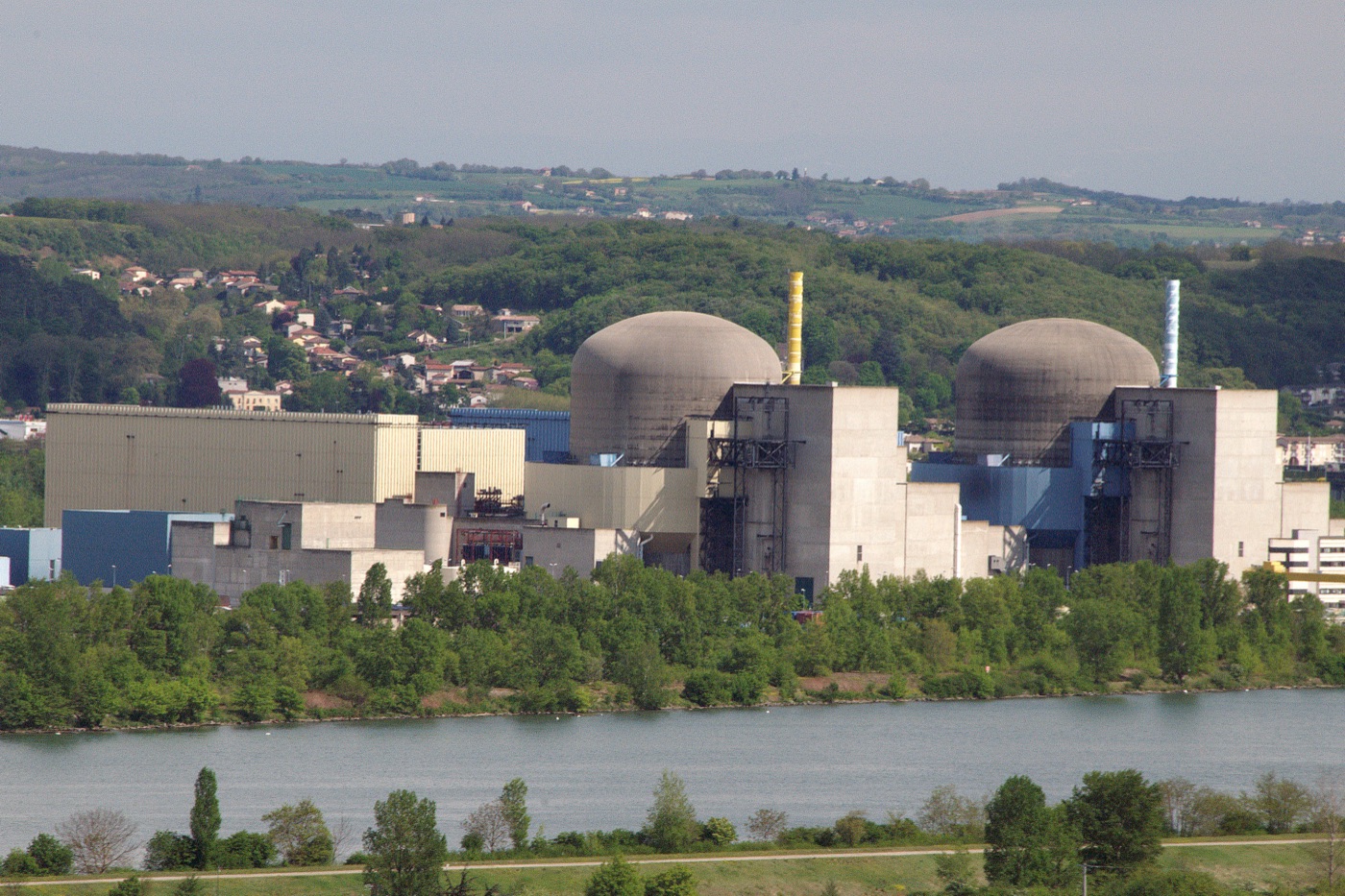
Image: Wikimedia Commons / CC BY-SA 3.0.
2024-2025 is the first real “warmup” year for nuclear after 13 quiet years. After Fukushima (2011), Germany shut down, Japan idled, Europe and the US stopped building — global nuclear share fell from 17% in 2006 to 9.5% by 2020. After 2024 the trajectory reversed: ① France’s Flamanville 3 connected after 12 years of stoppage and €20B of overrun (2024-12, France’s first new reactor in 25 years); ② China approved 10 Hualong Ones in a single year in 2025 (Sanmen 5/6 / Taishan 3/4 / Fangchenggang 5/6 / Zhaoyuan 1, etc.); ③ Vogtle 4 entered commercial operation (2024-04, one of the only two new US builds in 30 years; Unit 3 had come online in 2023); ④ AI datacenters ignited a PPA buying spree. The IAEA lifted its 2050 high case from 792 GWe in 2021 to 992 GWe (+25%), with five consecutive upward revisions — the strongest sentiment reversal in the past 30 years.
| Metric | Value | Reference |
|---|---|---|
| Global nuclear generation 2024 | 2,670 TWh (+2.8% YoY) | IEA · 11-year high |
| Global power share | 9.0% (2024 vs 2023 flat) | Peak 17% in 2006 · low 9.5% in 2020 |
| Operating reactors | 417 units (377 GWe installed) | IAEA PRIS · 2025-11 |
| Under construction | 62 units | Rosatom 27 (5 domestic + 22 export) |
Major nuclear nations · capacity and under construction
| Country | Operating (units) | Capacity (GWe) | Under construction | Nuclear % of power | Highlights |
|---|---|---|---|---|---|
| USA | 94 | 97 | 0 | ~19% | Nothing new since Vogtle 3/4 · 2024 capacity factor 92% |
| France | 57 | ~63 | 0 (6 EPR2 planned) | 67.3% | Flamanville 3 connected 2024-12 · EDF 100% state-owned |
| China | 57 | ~55 | 29-30 | ~5% | 10 approvals in 2025 · Hualong One 41 operating/under construction |
| Russia | 36 | ~28 | 7 domestic + 22 export | ~20% | VVER export · 2050 target 25% nuclear share |
| South Korea | 26 | ~25 | 2-3 | ~30% | APR1400 · Czech Dukovany awarded |
| Japan | 33 operable | ~14 operating | 2 | ~6% (2024) | 14 restarted post-Fukushima · 2030 target 20% |
| India | 22-24 | ~7 | 8 | ~3% | Domestic PHWR + Rosatom imports |
| UAE | 4 | 5.6 | 0 | ~25% | Barakah 4× APR1400 · all online by 2024-09 |
Sources: IAEA PRIS Database / WNA Country Profiles / WNISR 2025 / IEA Global Energy Review 2025. France’s 2024-12 Flamanville 3 EPR connection lifted capacity to ~63 GWe (56 → 57 reactors). China’s 57 reactors per IAEA as of 2025-11; effectively 58 after Zhangzhou 2 commercial operation 2025-12. Rosatom export under-construction: Egypt 4, India 4, Türkiye 4, China 4, Bangladesh 2, Iran 1, Slovakia 1.
IAEA long-term forecast · five consecutive upward revisions
The IAEA publishes “Energy, Electricity and Nuclear Power Estimates to 2050” annually. The most recent five vintages have all raised the 2050 high case:
- 2021 vintage: 2050 high 792 GWe
- 2022: 873 GWe
- 2023: 890 GWe
- 2024: 950 GWe
- 2025: 992 GWe (~2.6× actual 377 GWe in 2024)
The low case was also raised, to 561 GWe by 2050 (+50% vs 2024). SMRs make up ~24% of new capacity in the 2050 high case (5% in low) — the first time in 30 years that SMRs are an official IAEA forecast component, no longer a “concept.”
Bottom Line · Nuclear’s “30-year silence” is broken simultaneously by AI, climate, and geopolitics.
Nuclear’s 30-year slump came from three overlapping factors: ① post-Fukushima policy reversal; ② Vogtle / EPR / Olkiluoto cost overruns made “nuclear is expensive” the consensus; ③ rapid economic gains for renewables + storage. After 2024, three drivers push back the other way: ① AI datacenters need 24/7 low-carbon baseload (renewables can’t deliver); ② climate net-zero makes gas substitution harder; ③ Russia-Ukraine + Mideast geopolitics redefine “energy security”. The next 5-10 years will be SMR era + lifetime extensions + restarts of shuttered reactors.
§02 · Upstream · Mining — uranium mining
Nuclear fuel starts with U₃O₈ (yellowcake). Global primary production was about 60,213 tU (~157 Mlb U₃O₈) in 2024, estimated ~66.5 ktU (173 Mlb) in 2025 (WNA / TradeTech). Reactor demand was about ~80 ktU (204 Mlb) over the same period — a structural deficit running 3-4 years, filled by historical inventories (government + commercial) plus Rosatom supply. That’s why uranium spot rose from $30 to $80+ in 2023-2024.
2024 global uranium output · share by country
| Country | 2024 output (tU) | Global share | Major mines / companies |
|---|---|---|---|
| Kazakhstan | ~23,500 | 39% | Inkai · Karatau · Akbastau · Moinkum (Kazatomprom) |
| Canada | 14,309 | 24% | McArthur River · Cigar Lake (Cameco) |
| Namibia | 7,333 | 12% | Husab (CGN) · Rössing (CGN) · Langer Heinrich (Paladin) |
| Australia | ~4,800 | 8% | Olympic Dam · Ranger (closed) · Honeymoon |
| Uzbekistan | ~3,500 | 6% | Navoi MMC (state-owned) |
| Russia | ~2,800 | 5% | Priargunsky · Khiagda · Dalur (ARMZ/Rosatom) |
| Niger | ~2,000 | 3% | SOMAÏR / COMINAK (Orano) · interrupted after 2024 coup |
| China | ~1,700 | 3% | CNNC domestic; overseas via CGN (Husab) |
| Global total | 60,213 | 100% | ~157 Mlb U₃O₈ |
Listed miners · 2026-04 snapshot
| Company | Ticker | Mkt cap ($B) | 2024 output (Mlb U₃O₈) | Key assets |
|---|---|---|---|---|
| Cameco | CCJ · TSX:CCO | ~35 | ~25 (attributable) | McArthur River 70% / Cigar Lake 55% / Inkai 40% · 49% of Westinghouse |
| Kazatomprom | LSE:KAP | ~15 | ~62 (gross / 21% global) | World #1 · 14 mining sites · 75% state-owned |
| Orano | Private | — | ~6.5 | Cigar Lake 37% · Inkai 40% · 90% French state-controlled |
| NexGen Energy | NXE | ~8 | 0 (Rook I in build) | Athabasca high-grade · 2027-28 first ore · core upside |
| Paladin Energy | ASX:PDN | ~3 | 1.6 | Langer Heinrich (Namibia) restarted 2024 · acquired Fission |
| Uranium Energy Corp | UEC | ~3.5 | 0.6 | US-domestic ISR · Wyoming / Texas / New Mexico |
| Energy Fuels | UUUU | ~1.6 | ~0.2 | US White Mesa (the only operating conventional mill) |
| Denison Mines | DNN | ~2 | 0 (Wheeler River in build) | Athabasca projects · holds part of SPUT |
Sources: Cameco / Kazatomprom 2024 Integrated Annual Report; WNA World Uranium Mining Production; mkt cap as of ~2026-04-21. Cigar Lake 2024 gross 16.9 Mlb, Cameco share 9.2 Mlb; McArthur River/Key Lake 2024 actual 15.8 Mlb (below 18.3 plan due to ventilation incident). Husab is CGN-controlled; specific 2024 tonnage not disclosed.
Uranium price track · 2023-2026
| Date | Spot ($/lb) | Long-term ($/lb) | Event |
|---|---|---|---|
| End-2020 | 30 | 33 | Decade low |
| End-2022 | 48 | 52 | SPUT launched · Russia-Ukraine war |
| End-2023 | 91 | 72 | 15-year high |
| End-2024 | 73 | 82 | Spot pulled back / long-term still rising |
| End-2025 | ~80 | 86 | Long-term near 2008 level |
| 2026-04 | ~95-100 | 90 | AI-PPA grab feed-through; Q1 spot peak $101.41 |
Sources: TradeTech U₃O₈ Spot Price Indicator / Long-term Price Indicator; UxC tracking; Platts. Long-term price reflects 5+ year contracts and represents real industry settlement pricing. Long-term $90 is the highest since 2008, meaning the economic threshold for new mine development has formally opened.
Two main “uranium investment” vehicles · Physical uranium (SPUT / YCA) vs miner ETFs (URNM / URA).
Sprott Physical Uranium Trust (U.UN) · physical-uranium trust, continuously absorbing market inventory since 2021, pushing spot from $30 to $50+. Its size is itself a supply-demand signal. Yellow Cake plc (YCA.L) · holds 21.68 Mlb U₃O₈ as of 2025-09, reaching 23.0 Mlb after exercising the Kazatomprom $100M option; NAV $1.778B at 2025-09-30. Sprott Uranium Miners ETF (URNM) · AUM ~$1.75B, holdings Cameco 20.6% / SPUT 12.6% / NexGen 12.1% / Paladin 5.2% / UEC 5.1%. The three vehicles offer different exposures: physical captures spot beta, ETFs capture miner operating leverage. “Bullish on uranium” usually goes through SPUT; “bullish on growth” usually through NexGen / Cameco.
§03 · Upstream · Conversion + enrichment + fabrication — conversion + enrichment + fab
After leaving the mine as U₃O₈, fuel passes through three steps before entering a reactor: ① Conversion: U₃O₈ → UF₆ gas; ② Enrichment: UF₆ centrifuge separation → raise the ²³⁵U fraction; ③ Fuel fabrication: enriched UF₆ → UO₂ pellets → assemblies. Geopolitical concentration is extreme at every step: 5 conversion players, 4 enrichers, 4 fabricators — most of them in Russia / China / Europe. The US, despite being a major nuclear country, is heavily import-dependent on the fuel cycle, which is the political backdrop for the 2024-2026 US HALEU domestic plan.
Conversion (UF₆) · 5-player oligopoly
| Company | Country | 2024 output (kt UF₆) | Highlights |
|---|---|---|---|
| Cameco | Canada | 10.8 | Port Hope · 2025 guide 13-14 kt |
| Orano | France | 10.5 | Comurhex · 2025 ~11 kt · long-term target 14 kt |
| Rosatom | Russia | ~13 | Largest · TVEL/Tenex |
| CNNC | China | ~13 | Domestic-only · not in international markets |
| ConverDyn / Solstice | USA | ~6 (restarted 2024) | Metropolis Works · 2026 target >10 kt |
Enrichment (SWU) · Rosatom + CNNC ≥ 60%
| Company | Country | Capacity (M SWU/yr) | Global share | Highlights |
|---|---|---|---|---|
| Tenex (Rosatom) | Russia | 27+ | ~50% | 4 plants · Novouralsk / Zelenogorsk / Angarsk / Seversk |
| CNNC | China | ~9 | ~17% | Includes 1.5M SWU from Russian-transferred centrifuges |
| Orano | France | ~7.5 | ~14% | Georges Besse II · fully automated |
| Urenco | EU/US 4 countries | ~14.5 | ~27% | UK / NL / DE / US-NM · expansion +1.45M SWU |
| Global demand 2024 | — | ~47 | — | 2034 estimate >68 M SWU |
Sources: WNA / Mordor / Third Way reports. Rosatom + CNNC together hold ≥ 60% of global SWU capacity — the deepest single-point geopolitical risk in nuclear fuel after Russia-Ukraine. About 25% of US PWR / BWR fuel under Westinghouse used to come from Tenex; post-2023 it’s being filled by Urenco expansion + Centrus HALEU domestic build-out.
HALEU · the US SMR’s bottleneck
Next-generation reactors (SMRs, Gen-IV) need HALEU (High-Assay Low-Enriched Uranium, 5-20% ²³⁵U), while traditional LWR fuel only needs 3-5%. Commercial HALEU supply was almost exclusively Rosatom — embargoed after 2022, this leaves all five SMR companies (NuScale / TerraPower / X-Energy / Kairos / Radiant) without fuel.
- Centrus Energy (LEU) · the only US commercial HALEU producer. First 20 kg of HALEU UF₆ delivered to DOE in November 2023; Phase II 900 kg completed June 2025; Phase III renewed for ~$110M, ~$900 kg/year, through June 2026.
- DOE HALEU allocation plan · supply 21 t of HALEU by June 2026 to five companies (TRISO-X/X-energy / TerraPower / Kairos / Radiant / Westinghouse).
- TerraPower Natrium: first reactor pushed from 2028 to 2030 commissioning, partly because of HALEU supply.
HALEU is the hard constraint for US SMR commercialization in the next five years — and the policy catalyst behind Centrus, ASP Isotopes, and X-energy building TRISO-X.
Fuel fabrication · 4-player oligopoly
| Company | Main reactor type | Highlights |
|---|---|---|
| Westinghouse | PWR (largest globally) | Brookfield 51% / Cameco 49% (2023-11 acquisition $7.875B) |
| Framatome | PWR / EPR | EDF subsidiary · supplies EDF / CGN / Barakah |
| GNF (GE+Hitachi) | BWR (lead) | World #1 BWR; also produces TVS-K for TVEL in the US |
| TVEL (Rosatom) | VVER monopoly · entering PWR | Sole VVER supplier · TVS-K entering Western PWR market |
§04 · Midstream · Reactor vendors — major reactor vendors
Large reactors embody nation-state engineering capability — only 7 builders worldwide: US Westinghouse, France Framatome, Russia Rosatom, Korea KEPCO/KHNP, China CGN/CNNC, Canada AECL (Candu), Japan MHI/Hitachi. Their flagship designs and 20-year market shares clearly show “the geopolitical migration of build capability” — from the West to Russia + China + Korea.
Major reactor designs · 2025 status
| Design | Vendor | Capacity (MWe) | Operating / under construction | Highlights |
|---|---|---|---|---|
| AP1000 | Westinghouse | ~1,100 | 6 op / 14 build / 5 signed | Vogtle 3/4 · China Haiyang / Sanmen · Poland / Ukraine / Bulgaria |
| EPR / EPR2 | Framatome (EDF) | ~1,650 | 3 op / 6 build | Flamanville 3 / Finland OL3 / China Taishan / UK Hinkley Point C |
| VVER-1200 / 1000 | Rosatom | 1,000-1,200 | 30+ op / 27 build | Largest exporter · 4 each in Egypt/India/Türkiye/China + 2 Bangladesh |
| APR1400 | KEPCO/KHNP | ~1,400 | 6 op / 1-3 build | UAE Barakah 4× · Czech Dukovany awarded |
| Hualong One (HPR1000) | CGN / CNNC | ~1,150 | 7 op / 34 build/signed | China lead · 7 approved in 2025 · exports to Pakistan / Argentina |
| CAP1400 | CNNC | ~1,500 | 2 op / a few build | Guohe One · operating from 2023 · China’s “domesticated AP1000” |
| ABWR / ESBWR | GE Hitachi | 1,300-1,560 | 4 op / 2 build | BWRX-300 SMR takes the relay after 2030 |
Westinghouse · the core vehicle of America’s “comeback”
In November 2023 Brookfield + Cameco jointly acquired Westinghouse from Brookfield Renewable’s bankruptcy reorganization for $7.875B equity / $8.2B EV — Brookfield 51% / Cameco 49%. On 2025-10-27, the Trump administration announced an $80B strategic cooperation agreement with Westinghouse-Brookfield-Cameco to deploy AP1000 in the US, with the US government receiving a 20% revenue share above a $17.5B cash distribution threshold. This is the largest structural support for nuclear-reactor manufacturing in the US in 30 years. Westinghouse is also the largest US PWR fuel supplier; the dual-control by Brookfield + Cameco creates a vertical integration of upstream (uranium) + midstream (fuel) + reactor manufacturing.
Flamanville 3 · the EPR’s “lesson”
| Metric | Plan | Actual | Comment |
|---|---|---|---|
| Build period | 5 yrs (2007-2012) | 17 yrs (2007-2024) | 12-yr delay · typical for Western large reactors |
| Engineering cost | €3.3B | €13.2B | 4x overrun |
| Including financing | — | ~€23.7B (Cour des Comptes) | ~$25B / 1,650 MWe |
| EPR2 6-unit plan | — | €72.8B (2020 prices) | ~€89B in 2025 prices · first reactor 2038 |
Sources: Cour des Comptes (French audit) EPR report; EDF earnings; ITIF nuclear economics. Flamanville 3 unit investment ~€8,000/kWe (all-in), 5-10x same-period renewables + storage LCOE — that’s the direct source of the 20-year capital-markets view that “large reactors aren’t economic.” SMRs try to solve “large-reactor economics” through factory production at scale.
§05 · Midstream · SMR — Small Modular Reactors
SMRs (Small Modular Reactors, 50-300 MWe per unit) are the biggest business-model innovation in nuclear over the past decade: factory production replaces on-site construction, modular deployment lowers per-unit build cost, and smaller capacity fits industry / datacenter / remote-grid demand. Key 2025 milestones: NuScale earned NRC standard design certification in May (the first US SMR); Google + Kairos signed the world’s first commercial SMR PPA (2024-10); Meta signed three SMR/nuclear PPAs with Vistra / Oklo / TerraPower (totaling 6.6 GW) in a single week in January 2026. SMRs went from concept to orders, surprisingly with hyperscalers — not utilities — as the lead customers.
Major SMR companies · 2026-04 snapshot
| Company | Ticker | Mkt cap ($B) | Type | Capacity (MWe) | Key milestones |
|---|---|---|---|---|---|
| NuScale Power | SMR | ~7 | VOYGR (LWR) | 77/module · 6× | 2025-05 NRC certification · 2025-09 TVA 6 GW plan |
| Oklo | OKLO | ~10 | Aurora (fast reactor) | ~75 | Sam Altman backing · +248% in 2025 · Meta 1.2 GW |
| BWX Technologies | BWXT | ~11 | Microreactor + Naval + TRISO | 1-50 | Project Pele groundbreak 2025-07 · DoD microreactor |
| TerraPower | Private | ~$10B est. | Natrium (sodium-cooled fast reactor) | 345 | Bill Gates · Kemmerer WY · Meta 2 units + 6 priority options |
| X-Energy | Private | ~$2B est. | Xe-100 (high-temp gas-cooled) | 80/module · 4× | Amazon backing · Dow 2028 first-reactor decision |
| Kairos Power | Private | ~$2B est. | KP-FHR (molten salt + TRISO) | 50/module · 7× | Google 500 MW agreement · TVA Hermes 2 PPA |
| Holtec | Private | — | SMR-300 (LWR) | 300 | Palisades MI restart + adjacent SMR · multiple MoUs |
| Rolls-Royce SMR | Subsidiary of RR.L | — | PWR-SMR | 470 | UK GBN selected · ČEZ 20% strategic stake · 2030s deployment |
| GE Hitachi | — | — | BWRX-300 (BWR-SMR) | 300 | TVA Clinch River · OPG Darlington · first Western SMR project on the ground |
Sources: NuScale / Oklo / BWXT / Centrus public filings; TerraPower / X-Energy / Kairos / Holtec / Rolls-Royce announcements + DOE reports; mkt cap / valuations as of ~2026-04. NuScale VOYGR module is 77 MW; typical deployment of 6 modules = 462 MW; Kairos plans 1× 50 MW + 3 plants (each 2 units × 75 MW) = 500 MW total (for Google). Oklo declined the NRC standardized path, opting for build-own-operate.
SMR market forecast · wide valuation dispersion
- Optimistic · 2035 $40-50B. Assumes hyperscaler PPA + industrial process heat + remote-grid demand all materialize, with first NuScale / Kairos / X-Energy commercial deployments succeeding. Roots Analysis / Precedence Research midpoints.
- Neutral · 2035 $10-16B. Most SMRs first connect 2030-2032; commercial ramp takes 5-10 years. Order velocity gated by grid interconnection + HALEU supply + NRC review pace. Goldman / Citi valuation methodology.
- Conservative · 2035 $5-8B. If NuScale / Oklo first-reactor economics disappoint, or SMR LCOE remains $80-120/MWh and can’t compete with combined-cycle gas, SMR shrinks to a “premium custom” niche. WNISR 2025 etc.
⚠ Three common SMR investment misconceptions · NRC certification ≠ commercial success.
① NuScale’s 2023 UAMPS loss: even with government subsidies, an LCOE of $89/MWh (actually $119) was still too expensive for the customer → project canceled, stock $14 → $2. ② HALEU shortage pushed TerraPower to 2030: if Centrus / DOE plans don’t deliver, all Gen-IV SMRs get pushed back. ③ “AI hyperscaler off-take” is a new story but not a new fact: Microsoft / Google / Meta PPAs all power-on in 2030+; real cash flow is 5-7 years out. SMR investment return curves are steeper and more long-tailed than ordinary tech stocks.
§06 · Downstream · Utilities — nuclear utilities
Nuclear’s ultimate monetization layer is utilities / IPPs. 2024-2025 became a “rediscovery year”: Constellation +92% in 2024 and another ~30% in 2025 (the cleanest nuclear-asset beta in the US); Vistra +257% in 2024 (acquired Energy Harbor’s nuclear assets); Talen Energy (re-emerged from bankruptcy) made its name when AWS bought into Susquehanna. The market is repricing because “AI datacenters will pay a premium for 24/7 low-carbon baseload”.
Major listed nuclear utilities · 2026-04 snapshot
| Company | Ticker | Mkt cap ($B) | Nuclear capacity (GW) | Highlights |
|---|---|---|---|---|
| Constellation Energy | CEG | ~95 | 32.4 (incl. Calpine) | Largest US nuclear fleet · TMI restart for Microsoft · Calpine $16.4B acquired 2026-01 |
| Vistra | VST | ~70 | ~6.4 | 2024-03 Energy Harbor acquired · Meta 2,600 MW PPA |
| Talen Energy | TLN | ~22 | 2.2 (90% Susquehanna) | AWS Susquehanna PPA 1,920 MW · campus $650M sold to AWS |
| Public Service EG | PEG | ~46 | ~3.5 (Hope Creek + Salem) | In negotiations · close to a NJ datacenter PPA |
| Duke Energy | DUK | ~95 | ~10.8 | Carolinas nuclear + renewables · regulated utility |
| Southern Company | SO | ~110 | ~8 (all of Vogtle + Hatch + Farley) | Vogtle 3/4 owner · only US new build in 30 years |
| EDF | Private (nationalized 2023) | — | ~63 | France 56-57 reactors · all state-owned · €9.7B delisting |
| KEPCO/KHNP | KEP | ~12 | ~25 (domestic) + Barakah (UAE) | Czech Dukovany awarded · export-led |
| CGN | 1816.HK | ~30 | ~32 | China #1 · overseas projects + uranium (Husab) |
| CNNC | 601985.SH | ~25 | ~23 | China #2 · Hualong One/CAP1400 + upstream fuel |
Sources: each company’s 10-K / annual reports + earnings; mkt cap as of ~2026-04-21. Constellation completed the $16.4B Calpine acquisition in 2026-01; the new platform totals ~55 GW (combined-cycle gas + renewables/storage + nuclear); the 32.4 GW of nuclear is the largest in the US. Vogtle 3 in service 2023-07-31, Vogtle 4 2024-04-29, ~1,114 MW each, 60-80 year life. Vogtle full project cost ~$35B (vs $14B plan, 7-year delay).
Why Constellation / Vistra / Talen exploded this year
Core logic: fully-depreciated, already-licensed nuclear assets suddenly have a new buyer — “AI hyperscalers” — willing to pay far above ordinary wholesale “green + 24/7 + long-term” premiums.
- 2024 PJM wholesale capacity prices rose from $29/kW-day to $270/kW-day (×9) — nuclear operating margins rose structurally
- Microsoft + Constellation TMI PPA estimated at $110-115/MWh (analyst estimate; 2024 PJM spot avg ~$50)
- Meta signed 6.6 GW in one week in 2026-01 — about 25% of Vistra’s 2024 net power sales
- Already-operating nuclear “rediscovery” capex is very low ($1-2B restart vs $5-10B new build)
These four variables are why CEG re-rated from $30B in 2023 to $95B in 2026. “Already-depreciated asset values jumping” is rare in energy — it’s essentially a “low-carbon baseload scarcity premium.”
§07 · AI-driven renaissance — The AI nuclear renaissance
The clustering of hyperscaler nuclear PPAs since 2024 is the biggest demand-side event for the nuclear industry in 30 years. Strung along a timeline:
| Date | Buyer | Seller | Capacity (MW) | Type | Online year | Notes |
|---|---|---|---|---|---|---|
| 2024-03 | Amazon | Talen Energy | 1,920 | Nuclear (operating) | Immediate | Susquehanna-adjacent $650M campus + AWS investing $20B+ |
| 2024-09 | Microsoft | Constellation | 835 | Nuclear (restart) | 2028 | Three Mile Island Unit 1 · 20-year PPA · ~$110-115/MWh · DOE $1B loan |
| 2024-10 | Kairos Power | 500 | SMR (Gen-IV) | 2030+ | World’s first commercial SMR PPA · 1×50 MW + 3×(2×75 MW) plants | |
| 2024-10 | Amazon | X-Energy / Energy Northwest / Dominion | ~960 | SMR (Xe-100) | 2030+ | 3 projects · Washington / Virginia · 4× Xe-100 |
| 2025-01 | Meta | Constellation | 1,100 | Nuclear (operating) | 2027 | Clinton plant · 20-year extension PPA |
| 2025-09 | TVA (Kairos) | 50 (first) | SMR (Hermes 2) | 2030 | First US Gen-IV PPA · TVA is the utility | |
| 2026-01 | Meta | Vistra | 2,600 | Nuclear (operating) | Immediate | PA + OH multiple reactors · 20 years |
| 2026-01 | Meta | Oklo | 1,200 | SMR (Aurora) | 2030+ | Pike County, Ohio · Oklo’s largest single contract |
| 2026-01 | Meta | TerraPower | ~700 | SMR (Natrium) | 2032+ | 2 Natrium units + 6 priority options |
Sources: Constellation / Talen / Kairos / X-Energy / Vistra / Oklo / TerraPower / Meta announcements; Utility Dive / Bloomberg tracking. The exact Microsoft + Constellation TMI PPA price isn’t public; $110-115/MWh is analyst estimate (vs PJM 2024 wholesale ~$50). Most SMR PPAs power on in 2030+; real cash flow is 5-7 years out.
“We put every available nuclear option on the table — restart shuttered units, expand operating units, build new SMRs, sign long-term PPAs with IPPs. We invest more in ‘where the electricity comes from’ than in ‘which ML model to choose.’”
— Paraphrased, Meta infrastructure leadership, 2026 Q1 letter
§08 · Major countries — country-by-country snapshot
- USA · 94 reactors, no new build. No real new builds in 30 years — apart from Vogtle 3 (2023) and Vogtle 4 (2024), two AP1000s with $21B overrun and 7-year delay. From 2024 the structural reversal began: Three Mile Island restart, Palisades restart, Duane Arnold restart explored, Calpine acquired, HALEU domestic build, Westinghouse-Brookfield-Cameco $80B agreement. 2024 capacity factor 92%, world #1.
- France · 67% of power from nuclear. 56-57 reactors, ~63 GWe. The 2022 outage wave for maintenance pushed EDF to deep losses → fully nationalized 2023 for €9.7B. Flamanville 3 connected in 2024-12 (France’s first new build in 25 years). EDF is pushing the EPR2 plan: 6 reactors at €72.8B, first reactor Penly online 2038. Macron’s era is the real watershed of “nuclear re-nationalization.”
- China · 30 under construction, world’s #1 builder. 57 operating + 30 under construction; 10 Hualong Ones approved in 2025 (Sanmen 5/6 / Taishan 3/4 / Fangchenggang 5/6 / Zhaoyuan 1, etc.). The Hualong One series totals 41 operating/build/signed — the fastest-built reactor design globally. “East-data-West-compute” infrastructure + industrial decarbonization is the dual driver of China’s sustained nuclear ramp.
- Russia · export-led, VVER. 36 domestic + 27 under construction (7 domestic + 22 export). Rosatom is the world’s largest reactor exporter: Egypt 4, India 4, Türkiye 4, China 4, Bangladesh 2, Iran 1, Slovakia 1. 2050 plan: 25% nuclear share, 38 new builds. Also #1 globally in enrichment / conversion / fuel cycle — the deepest “single-point geopolitical risk” in the global nuclear chain.
- South Korea · APR1400 export. 26 domestic + APR1400 exports. UAE Barakah 4× APR1400 (5.6 GWe) all online by 2024-09, providing ~25% of UAE’s electricity. Czech Dukovany 4-unit contract signed 2024-07, starting at €20B+. KEPCO/KHNP is the only Western-bloc winner of large-reactor exports in the past decade (France / US / Japan have all lagged).
- UAE / Saudi / India · incremental markets. After UAE Barakah, Saudi Vision 2030 plans 16 GWe of new build, India aims for 22 GW → doubling by 2032. These “emerging large-reactor countries” are contested by Russia / Korea / China — Japan / Western Europe / US largely exited large-reactor exports after 2010.
Japan · post-Fukushima “restart” path
Pre-Fukushima (2011) Japan operated 54 reactors with ~30% nuclear share. After 2011 all units shut down, then NRA safety reviews enabled gradual restarts: 14 reactors restarted by 2025, nuclear share recovering to ~6%. Both Kishida and Ishiba governments treat “restart + new build” as core energy security. MHI / Hitachi / Toshiba — Japan’s three reactor builders — all survive but no longer actively bid for overseas large-reactor projects.
§09 · Power and uranium prices — nuclear economics
Nuclear’s economics have always been the industry’s most central and most painful topic: large reactors are expensive to build, long to deliver, and prone to overrun; but in operation they have extremely low marginal cost, high capacity factor, and 60-80 year lives. SMRs try to lower upfront capex via modularity, but post-NuScale UAMPS failure in 2023, real assessments of SMR economics have become more cautious. Comparing different sources’ LCOE on one table:
Lazard 2024 / 2025 LCOE comparison
| Source type | LCOE range ($/MWh) | Median | Notes |
|---|---|---|---|
| New nuclear (large reactor) | 141-220 | 180 | Unsubsidized · Vogtle-type cost |
| New nuclear SMR (estimate) | 80-120 | 100 | Unproven · NuScale UAMPS $89→$119 |
| Combined-cycle gas | 45-108 | 76 | 2021 median 60 → 2024 76 |
| Coal | ~70-130 | ~110 | Includes carbon / emissions cost |
| Onshore wind | 27-73 | 50 | Intermittent · not 24/7 |
| Utility solar (single-axis tracking) | 38-78 | 61 | Excluding storage |
| Standalone storage (4h) | 170-296 | ~230 | Unsubsidized |
| Solar + 4h storage | ~100-180 | ~140 | ”24/7 green” equivalent |
Sources: Lazard LCOE+ June 2024 (v17) + June 2025 (v18). The “solar + 4h storage” estimate of ~$140/MWh as a “24/7 green” equivalent vs new large-reactor LCOE $180 — this is the heart of nuclear’s “economics debate”: large reactors can no longer compete with solar+storage combinations, but if SMRs can land at $80-100, they remain competitive.
PPA real-world pricing · what AI datacenters will pay
Microsoft + Constellation TMI restart: estimated $110-115/MWh, far above PJM 2024 wholesale ~$50, but well below Lazard large-reactor LCOE $180. The spread comes from: ① the asset is already built — only $1.6B restart capex needed (avoiding new-build capex); ② Microsoft pays for “carbon-free + 24/7 + locked-in” scarcity. This “restart PPA” math only works for already-depreciated assets — beyond Three Mile Island, Palisades, and Duane Arnold, the candidate inventory is very limited.
New-build large-reactor PPAs can’t reach those numbers: Vogtle 3/4 LCOE estimates are $120-160/MWh (incl. $35B amortization), and Georgia Power’s pass-through to ratepayers triggered regulatory disputes. That’s why no hyperscaler signs new-build large-reactor PPAs — only restart + SMR + renewables/storage + gas mixes.
⚠ Two fundamental risks for nuclear stocks · ① Nuclear is “too expensive to build new.” ② SMR being “cheap enough to build new” is unproven.
① Large-reactor economics (Vogtle / Flamanville / Olkiluoto) have repeatedly proven that under Western political systems, large-reactor cost + schedule are uncontrollable. Restart PPAs are just reuse of legacy assets; they can’t sustain long-term growth. ② SMR economics will be proven 5-10 years from now. NuScale UAMPS failure + TerraPower delay + Oklo still in review mean real LCOE numbers won’t appear before 2030. The “nuclear renaissance” theme has been priced 5-7 years ahead in the 2025 rally — investors should expect SMR delivery timelines slipping below expectations and significant valuation volatility.
§10 · Outlook — what to watch next
- Three Mile Island 1 restart (2028). The first true “restart” of a US nuclear unit in 30 years. Actual capex / schedule / online date will set the benchmark for follow-on Palisades / Duane Arnold projects. With Microsoft buying the entire 20-year PPA, Constellation bears no market risk — if this “data center + nuclear” model works, more restart projects will follow.
- NuScale first reactor online (post-2030). NuScale earned NRC certification in May + a 6 GW TVA plan in September. But the first actual SMR power-on has slipped to post-2030. If LCOE lands at $100-120/MWh, SMR commercialization is fundamentally established; if > $150, NuScale risks repeating UAMPS.
- HALEU commercialization (2026-2028). Centrus Phase III renewed through 2026-06 with DOE. 2027 is the window to judge whether US-domestic HALEU can support full SMR deployment. If domestic HALEU stays short, all Gen-IV SMRs (TerraPower / Kairos / X-Energy / Radiant) get pushed back 2-5 years. Centrus / ASP Isotopes / X-Energy in-house TRISO-X capacity is the core catalyst.
- China’s Hualong One exports (2027-2030). Hualong One has 41 operating / build / signed in China — domestic market essentially saturated. Export orders (Pakistan 5 + Argentina negotiations + Saudi tender) are the node for judging “China’s globalization of large-reactor industry”. CGN / CNNC are likely to win 5-10 overseas orders in 2027-2030.
- SMR PPAs converting into cash flow (2030+). Most Google + Kairos / Microsoft + Constellation / Meta + Oklo PPAs come online post-2030. 2026-2030 is the “story + valuation” stage; post-2030 is the “cash flow validation” stage. If post-deployment SMR capacity factor / cost / maintenance data meet expectations, a second order wave follows post-2030; if not, SMR equities will draw down materially.
- Can uranium break above $120/lb. 2024 spot peaked at $107; long-term reached $90 by Q1 2026. New mine output (NexGen Rook I 2027-28, Cigar Lake expansion, Inkai ramp) gradually relieves supply; but demand-side increments (Vogtle, Hualong One, SMRs) keep rising into 2030. The supply-demand balance in 2027 is critical — if new supply lags, uranium can break $120/lb, lifting SPUT/URNM/Cameco/NexGen valuations another notch.
One-line summary · Nuclear has been repriced from “political no-go zone” to “scarce baseload of the AI era.”
2024-2025 is the deepest sentiment reversal in nuclear in 30 years — not because of a tech breakthrough (SMRs are still combat-untested), but because demand-side pricing power has changed: hyperscalers signing PPAs at 2x wholesale, a $80B government strategic deal, IAEA upgrading forecasts five years in a row, Constellation / Vistra / Cameco / NuScale / Oklo all multi-bagging. But this re-rating is primarily “old-asset value discovery + new-asset story premium”; real cash flow waits until 2028-2032. Picking your position on the “old asset vs new asset vs fuel cycle” axis matters ten times more than chasing the “nuclear renaissance” theme.